
Nerve Blocks & Injections
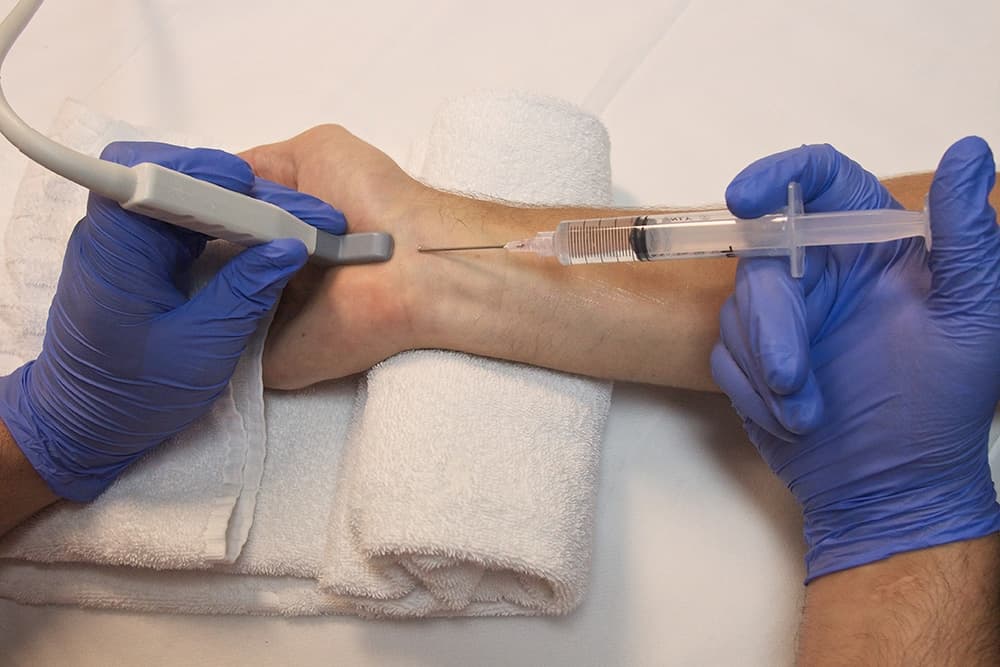
Carpal Tunnel Injections
Corticosteroid injected directly into the carpal tunnel, relieving median nerve compression and restoring hand function without surgery.
Nerve
Category
Outpatient
Procedure
Non-Opioid
Approach
Image-Guided
Precision
Procedure Overview
Treatment Purpose
Appropriate Conditions
- Carpal tunnel syndrome
- Median nerve compression
- Wrist pain with associated hand numbness, tingling, or weakness
Patient Considerations
Treatment Process
Frequently Asked Questions
How long does relief last?
Relief typically lasts weeks to several months depending on the severity of the compression and individual response.
Can this replace surgery?
For many patients, yes. For persistent or severe cases, surgery may ultimately be required, but injections are a reasonable first step before considering that option.
What are the risks?
Very low risk. Rare side effects include temporary soreness, bruising, or infection.
Medical disclaimer: This page provides general information and is not medical advice. It does not replace an evaluation by a qualified physician. Talk with a doctor about your specific condition and treatment options. If you are experiencing a medical emergency, call 911.
Need Guidance?
Talk With a SCOPES Specialist
Every care plan is based on your diagnosis, your symptoms, and your goals.
Back to all treatments